

The "Alignment" Fraud: Why Your Managers are Devaluing Your Diamonds
CEOs and C-Suite leaders: pay close attention.
While you are architecting future visions and services of excellence, "green" reports land on your desks suggesting everything is perfectly aligned with Board directives. However, whether through respect or fear of hierarchy, the reality on the ground often fails to reach the top. Silently, someone within your structure could be demolishing your brand’s foundations, driven by a lack of experience, a misunderstanding of premium markets, or an ego disguised as "professionalism."

Organizational Schizophrenia:
Why Training Fails When the Leader is the Weakest Link
The most expensive mistake a company can make isn’t hiring the wrong staff—it’s hiring the right trainers to solve a problem the leader refuses to acknowledge in the mirror.
When a manager, disconnected from the reality of the premium market, orders the team to push "right" (high-pressure, volume-driven sales) while elite trainers teach them to go "left" (consultative, value-based selling), the result is organizational schizophrenia.

Esquizofrenia Organizacional:
El costoso arte de entrenar al equipo para un partido que el líder no entiende.
El error más costoso que puede cometer una empresa no es contratar al personal equivocado, sino contratar a los formadores adecuados para solucionar un problema que el líder se niega a ver en el espejo.
Cuando un manager, desconectado de la realidad del producto y del mercado, ordena al equipo ir hacia la "derecha" (presión y volumen), mientras los formadores externos les enseñan a ir hacia la "izquierda" (valor y consultoría), el resultado es una esquizofrenia organizacional.

The Complacency Bias: AI as a Digital Echo Chamber
Did you know that AI is programmed to agree with you... even when you are wrong?
AI is designed to be helpful, which often leads it to validate a user’s premises rather than challenging them. If a user approaches a problem from a flawed perspective, the AI simply optimises the error.
The Scenario: Imagine a leader transitioning from high-pressure sales into a premium services market (£10k+). If they ask an AI to "optimise my sales scripts for faster closing," the AI won’t warn them that aggressive closing destroys trust in the luxury sector.

It’s Friday and your body knows it… But has your mind allowed it?
Many leaders confuse "constant availability" with productivity. But the reality is assertive: exhaustion is the ultimate generator of bias.
A dirty mirror doesn’t reflect reality; it distorts it. When your vision is clouded by the noise of the working week, your decisions risk losing their objectivity, becoming purely reactive.
It is 5:00 PM on a Friday and, in my role as your mirror of clarity, I would like to invite you to consider these suggestions so that by Monday, your vision is impeccable:
I suggest you try to let go of pending tasks
I suggest you decide what is right for your recovery
I suggest you prioritise what sustains you
I suggest you treat yourself to what you’ve been postponing
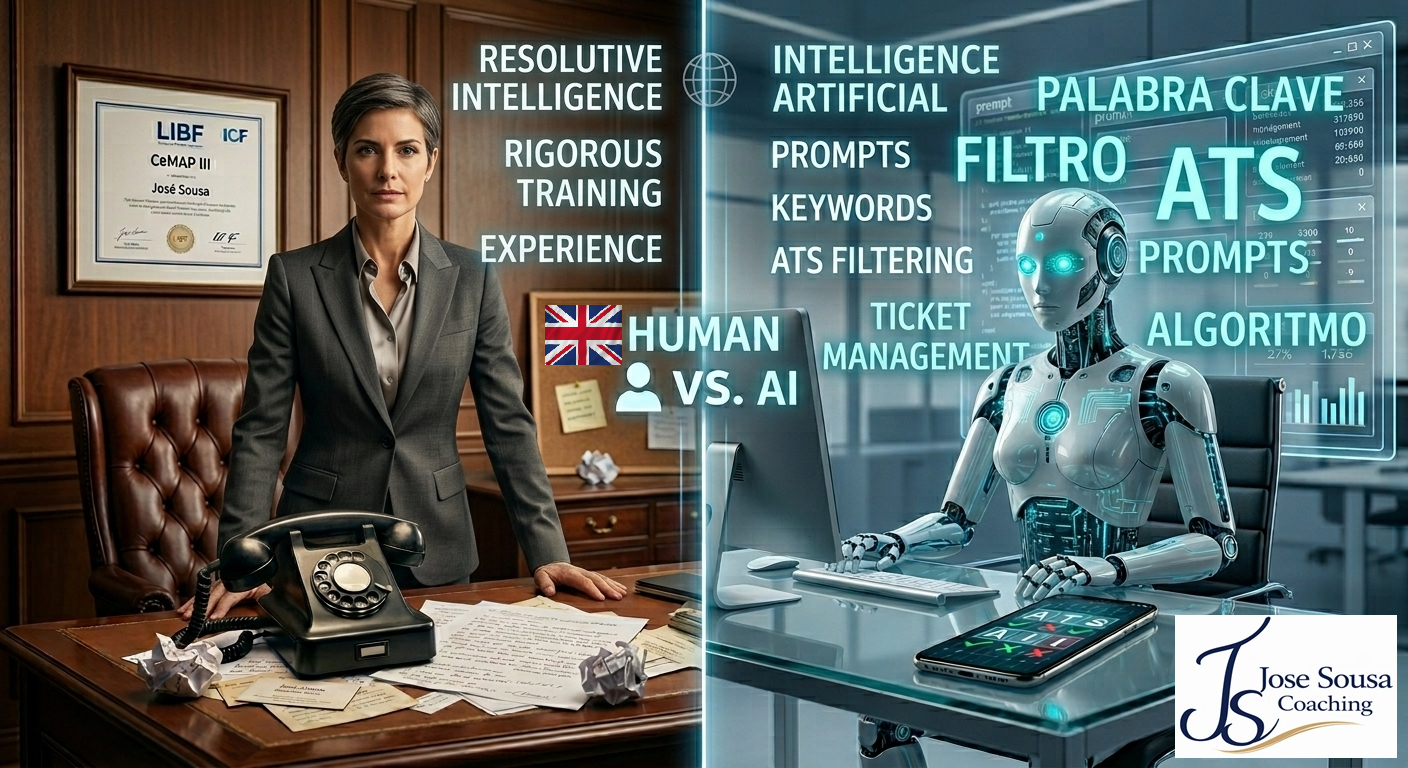
HR: Decision Making Intelligence vs. Artificial Intelligence
The Performance of Recruitment in the Age of AI
I am observing with increasing concern how the current discourse around Artificial Intelligence has turned the executive search process into a mere exercise in keyword optimisation. CVs no longer reflect leadership or resilience; they are surgically engineered to bypass a filter in a matter of milliseconds.
Having spent over 15 years in high-pressure international roles ranging from UK Regulatory Compliance to Leadership Architecture in Spain, I have seen the reality of the boardroom. Yet today, it seems that "on-the-ground" experience, the instinct to resolve a crisis without waiting for a system-generated prompt, is being overshadowed by ATS (Applicant Tracking System) labels.

Strategic Dismissal Management: From Improvisation to International Rigor
Strategic Dismissal Management: From Improvisation to International Rigor
Learn how to professionalize contract terminations and disciplinary dismissals through objective performance tracking, avoiding legal conflicts while optimizing corporate profitability with a global perspective from the UK and Spain.
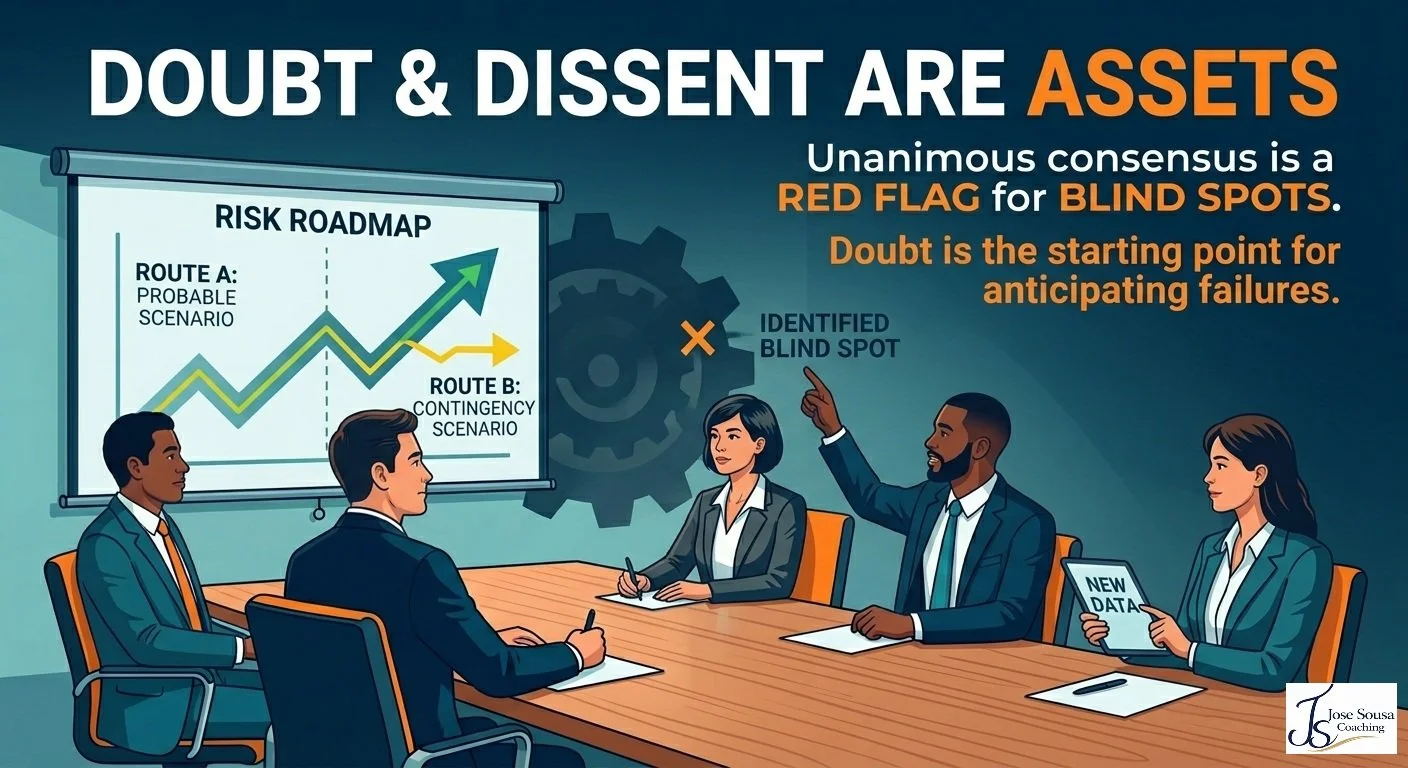
Decision Making: Why Unanimous Consensus is a Red Flag
Does your team always agree with you?
Beware: you might be trapped in "Groupthink." Discover why strategic doubt and dissenting voices are your best assets for identifying blind spots and preventing corporate disasters.
Learn to decide with the intellectual rigor of Daniel Kahneman and Ray Dalio.

Unsung Heroes or Ignored Assets? The cost of overlooking the talent you already have at home.
In the world of C-suite management, there is a phenomenon as common as it is dangerous: the "Outsource Effect"
It occurs when an in-house professional who understands the day-to-day operations and the inner gears of the business, designs a strategic move or a process improvement that saves or generates millions. However, in the company’s official narrative, that achievement "slips under the radar" or, worse, is attributed to an external consulting firm or the Project Manager of the moment who "came in to fix the problem”.

The Psychology of the Boardroom: Why Your KPIs Hide Operational Reality
The Psychology of the Boardroom: Why Your KPIs Hide Operational Reality
Apply Tony Robbins' 80/20 Rule to Audit Your Decision-Making
In the boardroom, there is a dangerous form of "corporate theater." You see flawless slides, color-coded KPIs, and optimistic projections. Everything looks perfect. However, when the market shifts, the strategy fails. Why? Because the Board is focusing on "the what" (the result) while systematically ignoring "the why" (the execution).
As an ICF-certified executive coach, I base my work on a fundamental principle of Business Psychology: "80% of success is psychology, 20% is mechanics."
Why Ignoring Executive Vulnerability is a Strategic Risk
In the corporate world, there is a dangerous myth: that high-performance leaders are immune to human fragility. Whether due to bereavement, health issues, or personal crises, current corporate culture forces executives to conceal their reality.
As a CEO, this isn't just a "wellness" issue; it is an operational risk. When your key talent feels they must hide who they are to keep their job, it creates information asymmetry that erodes your bottom line. If you cannot be honest with your team about your reality, you will not be honest about market risks.